
For healthcare professionals. Compounded preparations are dispensed on a doctor’s prescription.
Short answer: NAD+ is a coenzyme central to cellular energy and DNA repair; its levels decline with age. Oral NAD+ is poorly absorbed, so strategies use precursors — NMN and NR — that the body converts into NAD+. Liposomal encapsulation is proposed to improve oral bioavailability by protecting precursors. A compounding pharmacy prepares liposomal NAD+-precursor formulations on a doctor’s prescription under GCP.
What NAD+ Is and Why Its Levels Matter
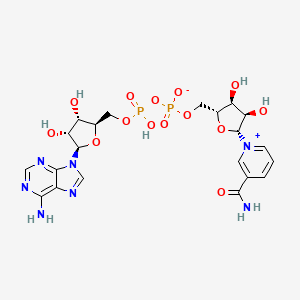
NAD+ (nicotinamide adenine dinucleotide) is a coenzyme present in every living cell. It is central to the reactions that turn food into cellular energy, and it fuels a family of repair and signalling enzymes — the sirtuins and PARPs — involved in DNA maintenance and the cellular stress response. NAD+ levels decline with age across many tissues. The reasoning behind supplementation is straightforward: if levels fall, restoring them might support the processes that depend on them. However, a measurable age-related decline is not, by itself, a disease, and raising a laboratory number is not the same as delivering a clinical benefit. Whether a given patient stands to gain is a judgement for the prescriber.
Why Precursors — and Why Absorption Is the Sticking Point
Swallowing NAD+ directly is inefficient; the intact molecule is largely broken down in digestion. Oral strategies therefore rely on precursors the body’s own enzymes convert into NAD+ — most studied being NMN (nicotinamide mononucleotide) and NR (nicotinamide riboside). Human trials fairly consistently show that oral NMN and NR do raise blood NAD+ levels.
A randomised, double-blind, placebo-controlled trial of oral nicotinamide riboside supplementation in healthy middle-aged and older adults reported that NR significantly increased blood NAD+ levels over a 6-week period (Martens et al., Nature Communications, 2018; PMID 29599478). A randomised, double-blind, placebo-controlled trial of oral NMN supplementation in healthy middle-aged participants found that NMN at 250 mg/day for 12 weeks safely elevated NAD+ metabolism (Katayoshi et al., Scientific Reports, 2023; PMID 36797393). A systematic review of 10 randomised clinical trials (489 participants) of NAD+ and NADH supplements, including precursors, reported that supplementation was well tolerated and that no adverse event was serious; the review pooled NAD+ and NADH studies and does not isolate NMN or NR (Gindri et al., American Journal of Physiology. Endocrinology and Metabolism, 2024; PMID 37971292).
However, the extent to which these precursors survive first-pass metabolism and reach systemic circulation intact is a recognised pharmaceutical challenge. NMN and NR are hydrophilic molecules that undergo substantial metabolism in the intestinal wall and liver, and the fraction that reaches the bloodstream as the intact precursor — available for cellular uptake and conversion to NAD+ — is limited.
The Liposomal Delivery Rationale for NAD+ Precursors
Liposomal encapsulation encloses the active precursor within phospholipid vesicles. The rationale is that the phospholipid bilayer may shield the precursor from enzymatic degradation in the intestinal wall and liver, potentially increasing the fraction that reaches systemic circulation intact. The phospholipid structure resembles the body’s own cell membranes, which may facilitate uptake across the intestinal epithelium.
This is a formulation strategy grounded in pharmaceutical science, not a claim that a liposomal preparation is clinically superior. No head-to-head human trial has directly compared a liposomal NMN or NR preparation against a non-liposomal form of the same precursor at the same dose. The decision to request a liposomal vehicle is a formulation choice the prescriber makes based on the pharmacokinetic rationale, not on comparative clinical data for these specific molecules.
Dosing Evidence from Clinical Trials
| Study | Design | Dose | Duration | Key finding | PMID |
|---|---|---|---|---|---|
| Martens et al. 2018 | Randomised, double-blind, placebo-controlled crossover | NR (nicotinamide riboside) — dose per protocol | 6 weeks | NR significantly increased blood NAD+ levels | 29599478 |
| Katayoshi et al. 2023 | Randomised, double-blind, placebo-controlled, parallel-group | NMN 250 mg/day (125 mg twice daily) | 12 weeks | NMN safely elevated NAD+ metabolism; pulse wave velocity tended to decrease | 36797393 |
| NMN dose-ranging trial 2023 | Randomised, multicentre, double-blind, placebo-controlled, parallel-group, dose-dependent | NMN 300, 600 or 900 mg/day | 60 days | Blood NAD+ increased in all NMN groups; highest at 600 and 900 mg; walking distance improved | 36482258 |
| NMN safety trial 2022 | Randomised, double-blind, placebo-controlled, parallel-group | NMN 1250 mg/day | 4 weeks | No severe adverse events; well tolerated at 1250 mg/day | 36002548 |
| Gindri et al. 2024 | Systematic review of 10 RCTs (489 participants) of NAD+ and NADH supplements | Not stated in the abstract | Not stated in the abstract | Supplementation well tolerated; adverse events not serious. Not specific to NMN or NR. | 37971292 |
Forms Lynnity Prepares
Lynnity prepares liposomal NAD+-precursor formulations as capsules or oral liquids, on a registered doctor’s prescription under Good Compounding Practice (GCP). The prescriber specifies the precursor (NMN, NR or a defined ratio), the strength per dose, the dosage form, and any excipient exclusions. Each preparation is made for one named patient.
A liposomal oral liquid suspends the precursor inside phospholipid vesicles dispersed in an aqueous vehicle, suitable for patients who cannot swallow capsules or who require a dose that falls between capsule strengths. A liposomal capsule encloses the precursor in a phospholipid matrix within a two-piece hard capsule shell.
Safety and Monitoring
The NMN trials cited above reported good tolerability at the doses studied. The systematic review by Gindri et al. (2024; PMID 37971292) reported that supplementation with NAD+ or NADH, and precursors, was well tolerated with a low incidence of side effects; it pooled NAD+ and NADH studies and is not specific to NMN or NR. The NMN dose-ranging trial (PMID 36482258) found no safety issues at doses up to 900 mg/day for 60 days, and a dedicated safety trial (PMID 36002548) reported that 1250 mg/day for 4 weeks produced no severe adverse events. The most common adverse events listed in the systematic review were muscle pain, nervous disorders, fatigue, sleep disturbance and headaches, none presenting a serious risk to participants.
Prescribers should note that the evidence base is drawn from healthy adult populations, not from patients with specific medical conditions. Monitoring should include periodic review of the patient’s clinical status and any reported effects, with dose adjustment as the prescriber judges appropriate.
How to prescribe
A registered doctor in Malaysia prescribes a liposomal NAD+-precursor preparation. The prescription must specify the active precursor (NMN, NR or a defined combination), the strength per dose, the dosage form (capsule or oral liquid), the quantity and directions for use. The prescription is sent to Lynnity Pharma, a non-sterile compounding pharmacy operating under Good Compounding Practice (GCP).
To discuss a formulation or to send a prescription, contact Lead Pharmacist Vitthia Rama Murti, RPh (RPh 15632) at the compounding facility, MWE Commercial Park, Kepong, Kuala Lumpur, via the contact page.
Lynnity also prepares other liposomal formulations for longevity and wellness — including liposomal resveratrol and compounded NAD+ precursors in standard forms — and operates a GCP laboratory for non-sterile compounding.
Frequently asked questions
What is the difference between NMN and NR?
NMN (nicotinamide mononucleotide) and NR (nicotinamide riboside) are both precursors the body converts into NAD+. NMN is a mononucleotide that requires conversion to NR before entering cells; NR is a nucleoside that crosses cell membranes more readily. Both have clinical trial evidence showing they raise blood NAD+ levels.
Is liposomal NAD+ better than standard NMN or NR?
No head-to-head human trial has directly compared a liposomal NAD+-precursor preparation against a non-liposomal form of the same precursor at the same dose. The liposomal rationale is pharmaceutical — protecting the precursor from first-pass metabolism — but comparative clinical data for these specific molecules are not yet available.
What dose of NMN or NR is supported by clinical trials?
NMN has been studied at 250 mg/day (12 weeks), 300–900 mg/day (60 days) and 1250 mg/day (4 weeks), all well tolerated. NR has been studied in a 6-week crossover trial. The prescriber selects the dose based on the clinical rationale and the patient’s individual circumstances.
Can a patient who cannot swallow capsules take a liposomal NAD+ preparation?
Yes. Lynnity prepares liposomal NAD+-precursor formulations as an oral liquid for patients who cannot swallow capsules or who require a dose between capsule strengths.
Does a liposomal NAD+ preparation require a prescription?
Yes. Every compounded preparation at Lynnity is made only on the prescription of a registered doctor, under Good Compounding Practice (GCP).
Reviewed by Vitthia Rama Murti, RPh (RPh 15632), Lynnity Compounding Pharmacy, Kuala Lumpur.