
For healthcare professionals. Compounded preparations are dispensed on a doctor’s prescription.
Short answer: For premenstrual syndrome, the Cochrane review of progesterone found only two eligible randomised trials, with 280 participants (PMID 22419287), and its authors concluded that the trials did not show progesterone to be effective or ineffective. Compounded progesterone, as a cream or capsule, is prepared on a named patient’s prescription under Good Compounding Practice (GCP).
Why premenstrual syndrome is a prescribing question
Premenstrual syndrome (PMS) is a cyclical condition, and the prescribing question it raises is less about the drug than about the evidence. The BMJ Clinical Evidence review puts the scale plainly: “Premenstrual symptoms occur in 95% of women of reproductive age. Severe, debilitating symptoms (PMS) occur in about 5% of those women” (PMID 19454075). The same review notes that there is no consensus on how symptom severity should be assessed, which has led to a wide variety of symptom scales and makes it difficult to synthesise data across studies (PMID 19454075).
For a prescriber this has two practical consequences. First, the diagnosis rests on a prospective symptom record rather than a single consultation. The Cochrane review’s inclusion criteria required randomised double-blind, placebo-controlled trials of progesterone in women “diagnosed by at least two prospective cycles, without current psychiatric disorder” (PMID 22419287). Second, the response to any hormonal option is hard to judge from one patient’s cycles, because the symptoms are cyclical and the scales differ between studies.
The active and the rationale that has been proposed
Progesterone is the active under review here, and the Cochrane background describes the rationale that has been proposed for giving it in PMS: “Treatment with progesterone may restore a deficiency, balance menstrual hormone levels or reduce effects of falling progesterone levels on the brain or on electrolytes in the blood” (PMID 22419287). These are hypotheses. The review was written to test whether progesterone works, not to confirm why it would.
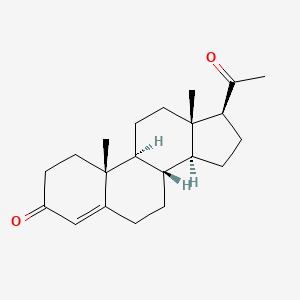
The molecule is well defined, so the pharmaceutical question is practical: which strength, which form and which vehicle a named patient’s prescription should specify. That is a prescriber decision, and the trial record does not settle it.
What the trial evidence shows
The Cochrane search identified 17 studies. Only two met the review’s inclusion criteria, which were randomised double-blind, placebo-controlled trials of progesterone in women with PMS (PMID 22419287). Together the two trials had 280 participants aged between 18 and 45 years, and 115 of them yielded analysable results (PMID 22419287). Both trials measured symptom severity with subjective scales. The authors state that the studies, “differing in design, participants, dose of progesterone and how delivered”, could not be combined in a meta-analysis (PMID 22419287).
The smaller trial, according to the review, found no statistically significant difference between oral progesterone, vaginally absorbed progesterone and placebo, but reported its outcomes incompletely (PMID 22419287). In one trial, when data from ineligible women were excluded from analysis, the other women were found to have benefited more from progesterone than from placebo. The authors describe both trials as having defects, and they note that neither trial distinguished a subgroup of women who benefited (PMID 22419287).
The review’s own conclusion is the sentence a prescriber needs. The authors wrote that the trials did not show progesterone to be effective for PMS, and did not show that it is not effective (PMID 22419287). Neither trial examined the high-dose claims (PMID 22419287).
A 2007 BMJ Clinical Evidence systematic review lists progesterone among the interventions it assessed for PMS, together with hormonal, psychological, physical and dietary options (PMID 19454075). It reports that it found 52 systematic reviews, randomised trials or observational studies that met its criteria (PMID 19454075).
What the evidence does not yet answer
- Dose. The review itself notes that high-dose claims were not examined (PMID 22419287).
- Form. The review compares oral progesterone with vaginally absorbed progesterone. It does not compare a topical cream with a capsule, so the choice of form cannot be ranked on this evidence.
- Subgroups. The review found no trial that identified which women benefit (PMID 22419287).
Forms Lynnity prepares for this indication
Two forms are presented here as Lynnity preparations: a capsule and a cream, each prepared to the prescriber’s written specification for one named patient. The capsule suits a patient who takes an oral preparation. The cream suits a prescriber who wants a topical route. The review gives no basis for ranking the two, so the choice belongs to the prescriber, who should record the reason on the prescription.
Safety, monitoring and interactions
The Cochrane review reports that adverse events, “which may or may not have been side effects of the treatment”, were described as mild (PMID 22419287). That is a description of two small trials and is not a safety profile for a compounded preparation.
- Confirm the diagnosis from prospective cycle records before prescribing, since the review’s inclusion criteria required diagnosis by at least two prospective cycles (PMID 22419287).
- Check for a current psychiatric disorder, since the review’s inclusion criteria required women without a current psychiatric disorder (PMID 22419287).
- Review the full medication list for interactions.
Reviewed by Vitthia Rama Murti, RPh (RPh 15632).
How to prescribe
Who can prescribe. A registered doctor practising in Malaysia prescribes the compounded preparation for a named patient. Compounded preparations are dispensed only on that prescription.
What the prescription must state. The active (progesterone), the strength the prescriber has determined, the form (capsule or cream), the quantity and the directions, together with the patient’s identity.
How to send it. Lynnity’s referral process is a named-patient prescription with a short formulation brief, sent to the pharmacy. The steps are set out at the Kuala Lumpur and Klang Valley referral guide for clinics.
Contact. Vitthia Rama Murti, RPh (RPh 15632). Start the conversation through the contact page. Preparations are made at Lynnity’s compounding laboratory in Kuala Lumpur.
Related reading: why KL clinics struggle to source bioidentical progesterone, a compounding FAQ on progesterone, oestrogen and testosterone, and topical versus oral compounded hormones.
Frequently asked questions
What did the Cochrane review conclude about progesterone for premenstrual syndrome?
The review found only two trials that met its criteria, with 280 participants aged 18 to 45. Its authors wrote that the trials did not show progesterone to be effective for PMS, and did not show that it is not. Neither trial identified a subgroup of women who benefited, and neither examined high-dose claims (PMID 22419287).
How common is premenstrual syndrome?
The BMJ Clinical Evidence review states that premenstrual symptoms occur in 95% of women of reproductive age, and that severe, debilitating symptoms (PMS) occur in about 5% of those women (PMID 19454075). The review’s own scope is broad, so the figure describes the population it covered rather than a Malaysian prevalence.
Is cream or capsule the better form for progesterone in PMS?
The Cochrane review does not compare a topical cream with a capsule (PMID 22419287). The review compared oral progesterone with vaginally absorbed progesterone and placebo, so the choice of form is a prescriber decision made for the named patient and recorded on the prescription.
What must a prescription for compounded progesterone state?
It should name the active, the strength the prescriber has chosen, the form, the quantity, the directions and the patient’s identity.