
Compounded preparations are dispensed only on a doctor’s prescription.
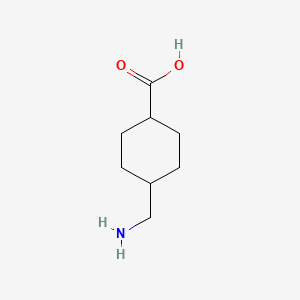
Short answer: Tranexamic acid has been studied in melasma by mouth and as a topical cream. A 2024 meta-analysis of 22 studies with 1,280 patients (PMID 38843906) reported reductions in melasma severity measures. These trial findings do not establish an outcome for a patient-specific compounded cream or capsule. Any compounded preparation requires a named patient’s prescription under Good Compounding Practice (GCP).
What people search for, and why it is a prescription matter
A patient looking for melasma treatment in Malaysia usually wants to know whether tranexamic acid is suitable, how it works, and how it is obtained. Its use for melasma is a prescribing decision. A compounded preparation is made for one named patient only, on a doctor’s prescription, so the route to it runs through the doctor.
The evidence below describes what the studies report.
The condition and why it is hard to manage
A 2024 split-face trial of 20 subjects describes melasma as “a chronic acquired skin pigmentation disorder, characterized by the presence of irregular-edged brown to gray-brown patches with a symmetrical distribution, primarily on sun-exposed areas such as the face” (PMID 38918942). A 2025 trial notes that melasma “primarily affects females of reproductive age” and that “managing melasma is challenging due to frequent relapses and partial responses” (PMID 40923777).
How tranexamic acid is placed in the condition
The 2025 trial of oral and topical tranexamic acid describes the drug as having gained attention “because of its antifibrinolytic and anti-melanogenic properties” (PMID 40923777).
What the trials report
A 2024 meta-analysis and systematic review included 22 studies with 1,280 patients. It reports that “TXA significantly reduced melasma severity”, with reductions in MASI, mMASI, melanin index and hemi-MASI scores (PMID 38843906). It also notes that “oral TXA showed the most substantial decrease in MASI scores” among the routes it compared (PMID 38843906). The same abstract flags “high heterogeneity”, particularly in combined treatments (PMID 38843906). These pooled findings are not an evaluation of a Lynnity preparation.
A 2025 randomised trial of 50 women compared oral TXA 250 mg twice daily with a topical 5% TXA cream applied twice daily for 12 weeks. Both groups showed significant reductions in MASI scores, of 58.86% with oral TXA and 50.88% with the topical cream, and the authors describe the difference between them as not statistically significant (PMID 40923777). The authors conclude that “both forms of TXA are effective with low side effects” (PMID 40923777). One patient in the topical group discontinued because of sensitivity (PMID 40923777). These are findings for the study formulations, not for compounded preparations supplied by Lynnity.
A 2024 split-face randomised trial of 20 subjects compared a 3% TXA cream with a 4% hydroquinone cream over eight weeks. The abstract reports a significant decline in the mMASI score at weeks 4 and 8 in both groups, with no statistically significant difference in patient global assessment between them (PMID 38918942). The authors describe the 3% TXA cream as “as effective and safe as 4% HQ” in the Indonesian population (PMID 38918942).
A 2025 randomised, double-blind trial of 99 patients compared a niosomal TXA 2% with niacinamide 2% cream and a conventional TXA 5% with niacinamide 4% cream, each against a 4% hydroquinone cream over three months. The abstract reports that “all treatment groups showed a considerable reduction in melanin index and modified melasma area and severity index (mMASI) scores” (PMID 41315336). The combined TXA-niacinamide creams are distinct from plain tranexamic acid cream.
The oral dose is the subject of a separate network meta-analysis of six randomised trials with 599 patients. Its authors identify 250 mg three times daily for 12 weeks as the regimen their analysis favoured, and state that 250 mg twice daily “may be an acceptable option in poorly adherent patients” (PMID 36332095).
Dosing ranges, with sources
| Study | Route and strength | Schedule | Duration | PMID |
|---|---|---|---|---|
| Randomised trial, oral versus topical | Oral TXA 250 mg | Twice daily | 12 weeks | 40923777 |
| Randomised trial, oral versus topical | Topical TXA 5% cream | Twice daily | 12 weeks | 40923777 |
| Split-face randomised trial | Topical TXA 3% cream | Not specified in the abstract | 8 weeks | 38918942 |
| Network meta-analysis of oral TXA | Oral TXA 250 mg | Three times daily | 12 weeks | 36332095 |
Study table
| Design | Participants | Preparation | Outcome as reported | PMID |
|---|---|---|---|---|
| Randomised, double-blind trial | 99 patients | Niosomal TXA 2% with niacinamide 2%; conventional TXA 5% with niacinamide 4%; hydroquinone 4% | Considerable reduction in melanin index and mMASI in all groups | 41315336 |
| Split-face randomised trial | 20 subjects | Topical TXA 3% versus hydroquinone 4% | Significant decline in mMASI at weeks 4 and 8 in both groups | 38918942 |
| Randomised trial | 50 women | Oral TXA 250 mg twice daily; topical TXA 5% cream | Significant MASI reductions in both groups; difference not statistically significant | 40923777 |
| Meta-analysis and systematic review of RCTs | 22 studies, 1,280 patients | Tranexamic acid across the trials reviewed | TXA significantly reduced melasma severity across the studies | 38843906 |
Limits of the evidence
- Several of the trials are small, including the split-face study of 20 subjects (PMID 38918942) and the 50-woman comparison (PMID 40923777).
- The meta-analysis reports high heterogeneity (PMID 38843906).
- Some studied creams combine tranexamic acid with niacinamide (PMID 41315336).
Safety and what to report
The meta-analysis lists gastrointestinal discomfort, skin irritation and menstrual irregularities among the adverse effects in its included studies (PMID 38843906). Tell your doctor about skin irritation, gastrointestinal discomfort or menstrual changes, and discuss your medical history and medicines before a prescription is written.
Reviewed by Vitthia Rama Murti, RPh (RPh 15632).
The forms Lynnity prepares
Lynnity prepares tranexamic acid as a cream or a capsule, each made to the prescriber’s written specification for one named patient. The form is a prescriber decision. Oral and topical routes were compared in one 2025 randomised trial (PMID 40923777), which found no statistically significant difference in MASI reduction between its study groups; the trial did not evaluate a Lynnity formulation.
How to get this prescribed
Ask your doctor. A registered doctor in Malaysia decides whether tranexamic acid is suitable for you, and which route and form to use. A compounded preparation is made only if your doctor sends a prescription.
What the prescription should state. The active (tranexamic acid), the strength your doctor has chosen, the form (cream or capsule), the quantity, the directions and your identity.
How it is sent. Your doctor sends the named-patient prescription with a short formulation brief to the pharmacy. The steps are set out in the Kuala Lumpur and Klang Valley referral guide for clinics. Your doctor can also read the practitioner’s guide to compounded brightening creams before writing the prescription.
Contact. Vitthia Rama Murti, RPh (RPh 15632). Your doctor can start the conversation through the contact page.
The condition page for compounded melasma and pigmentation topicals is at compounded melasma treatment.
Frequently asked questions
How does prescription tranexamic acid work in melasma?
A 2025 randomised trial describes tranexamic acid as having antifibrinolytic and anti-melanogenic properties (PMID 40923777). Your doctor can explain how it fits your plan.
Is oral tranexamic acid more effective than a topical cream?
A 2025 randomised trial of 50 women found MASI reductions of 58.86% with oral tranexamic acid and 50.88% with a topical 5% cream after 12 weeks. It reported the difference between them as not statistically significant (PMID 40923777). The choice of route is a decision for your doctor and you.
Is tranexamic acid safe for melasma?
A 2024 meta-analysis and systematic review lists gastrointestinal discomfort, skin irritation and menstrual irregularities among the adverse effects in its included studies (PMID 38843906). This does not establish the safety of a patient-specific compounded preparation.
What must a prescription for compounded tranexamic acid state?
It should name tranexamic acid, the strength your doctor has chosen, the form (cream or capsule), the quantity, the directions and your identity.