
Short answer: A compounded 10% lidocaine cream delivers double the local-anaesthetic concentration of the commercial 5% lidocaine patch, providing high-strength topical anaesthesia for focal neuropathic pain when the commercial patch strength is insufficient or a cream form is preferred for anatomical conformity. The preparation is made as a non-sterile cream for a named patient on a doctor’s prescription under Good Compounding Practice (GCP). The primary safety concern is systemic absorption — at 10%, the lidocaine dose per gram of cream is 100 mg, and the prescriber must calculate the maximum daily exposure against the 4.5 mg/kg topical lidocaine ceiling.
Why compound a 10% lidocaine cream
The commercial 5% lidocaine patch is a registered product widely used for postherpetic neuralgia and focal neuropathic pain. A Cochrane review of topical lidocaine for neuropathic pain in adults noted that while widely used in clinical practice, the quantity and quality of evidence was insufficient to support a strong recommendation, reflecting the reality that many topical anaesthetics are prescribed on mechanistic rationale (Derry et al., Cochrane Database of Systematic Reviews, 2014; PMID 25058164). A randomised, double-blind, placebo-controlled study of the lidocaine patch in postherpetic neuralgia demonstrated efficacy at the 5% concentration (Rowbotham et al., Pain, 1996; PMID 8826488).
When a prescriber needs a higher concentration than 5%, or a cream form rather than a patch — for anatomical sites where a patch does not conform, or for patients who require a different application method — compounding allows the preparation of 10% lidocaine in a cream or gel base. A randomised, double-blind, placebo-controlled crossover study of 10% lidocaine ointment on allodynia in cancer pain demonstrated that 10% lidocaine in a topical form produces measurable clinical effects (Hasuo et al., Journal of Palliative Medicine, 2019; PMID 31120313). A network meta-analysis of topical drugs for postherpetic neuralgia compared multiple topical agents and formulations, supporting the role of topical lidocaine in this condition (Liu et al., Pain Physician, 2020; PMID 33185370).
Clinical indications and target patients
The 10% lidocaine cream is typically prescribed for focal neuropathic pain where the commercial 5% patch is insufficient or impractical. Clinical settings include postherpetic neuralgia, focal peripheral neuropathic pain syndromes, and cancer-pain allodynia where a topical local anaesthetic is appropriate. The target patient population is adults with localised neuropathic pain on intact skin, where the prescriber has determined that 5% lidocaine does not provide adequate effect or that a cream form is clinically preferable to a patch.
Dosing and application guidance
The cream is applied as a thin layer to the painful area, typically 1–3 times daily. The amount per application must be calculated against the maximum recommended lidocaine dose for topical application — 4.5 mg/kg in healthy adults. At 10% concentration, each gram of cream delivers 100 mg of lidocaine. For a 70 kg adult, the maximum daily dose is 315 mg, which limits application to approximately 3 g of cream per day across all applications. The prescriber should specify the exact amount per application, the number of applications per day, and the maximum total daily amount.
Patients should be counselled to apply to intact skin only, in a thin layer, and to wash hands after application. The application site should not be covered with an occlusive dressing unless the prescriber specifically directs it, as occlusion increases absorption.
Formulation notes
Vehicle and base selection
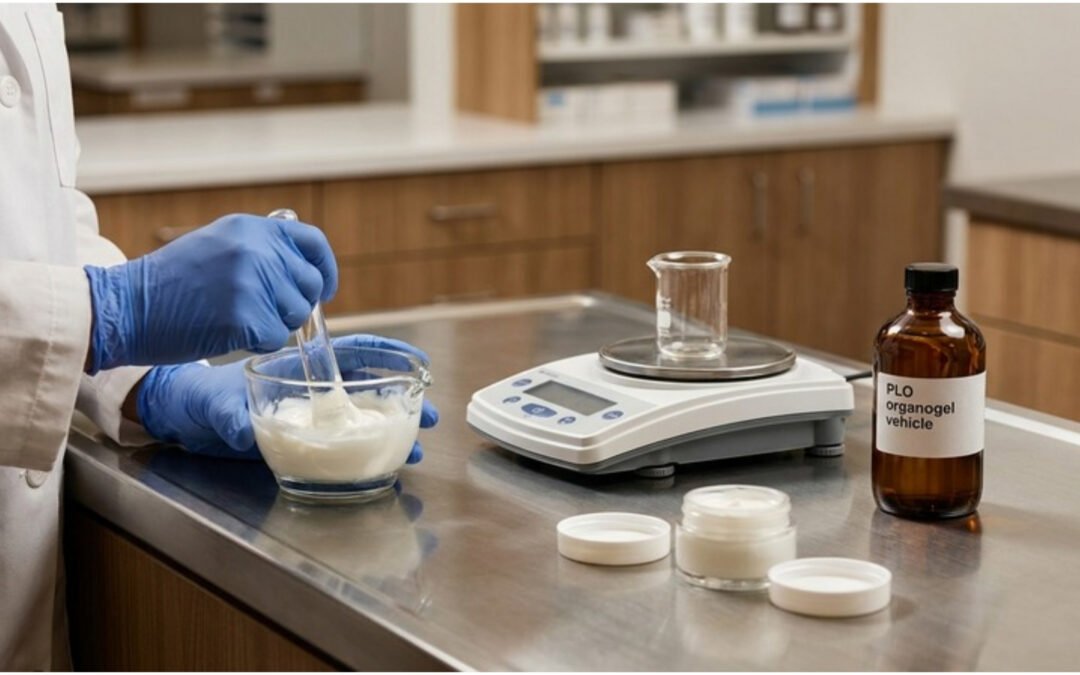
The vehicle should enhance penetration to the dermal nerve targets. A pluronic lecithin organogel (PLO) base is commonly selected for its penetration-enhancing properties with lipophilic actives. A liposomal delivery vehicle is an alternative — enclosing the lidocaine in a phospholipid vesicle may carry it through the skin’s lipid route. The choice between PLO and liposomal delivery depends on the prescriber’s preference and the pharmacy’s formulation capabilities. An emollient cream base may be selected when penetration enhancement is not the primary goal.
Stability and beyond-use dating
Lidocaine is an amide anaesthetic and is more stable than ester anaesthetics in aqueous environments. The BUD is typically assigned at 30–90 days for a non-sterile cream, depending on the base, water activity and stability data. The preparation should be stored at room temperature or refrigerated as specified, and protected from light.
Compatibility and interactions
Lidocaine is metabolised by hepatic CYP3A4 enzymes. Patients taking Class III antiarrhythmic drugs (e.g., amiodarone) or CYP3A4 inhibitors should be identified, as systemic absorption — though low with topical application — could potentially interact. Patients with known amide local-anaesthetic sensitivity should not be prescribed this preparation.
Safety and counselling — systemic absorption ceiling
Flag: 10% lidocaine is double the commercial patch strength, and systemic absorption is the primary safety concern. A study of systemic absorption of topical lidocaine in normal volunteers, patients with post-herpetic neuralgia, and patients with acute herpes zoster confirmed that lidocaine is absorbed systemically from topical application, though blood levels remained below toxic thresholds at the doses studied (Campbell et al., Journal of Pharmaceutical Sciences, 2002; PMID 11977110). At 10% concentration, the margin between therapeutic and potentially toxic systemic levels is narrower than at 5%.
Recommended mitigations:
- Calculate the maximum daily lidocaine dose against body weight (4.5 mg/kg ceiling) and specify it in the prescription
- Apply to intact skin only — never broken, inflamed or mucosal surfaces
- Limit the total application area per dose
- Do not apply heat to the treated area — heat increases absorption unpredictably
- Avoid occlusive dressings unless specifically directed by the prescriber
- Counsel patients on signs of systemic lidocaine toxicity: dizziness, tinnitus, perioral tingling, confusion
- Identify patients on Class III antiarrhythmics or CYP3A4 inhibitors before prescribing
- For elderly patients or those with hepatic impairment, consider a lower application amount or frequency
Documentation checklist for prescribers
- Named patient and prescriber details
- Active ingredient and exact strength: lidocaine 10%
- Dosage form: cream or gel (specify PLO, liposomal or emollient base preference)
- Clinical rationale: why 10% is required rather than the commercial 5% patch
- Application site and area: anatomical location and maximum surface area
- Amount per application and frequency: with calculated daily lidocaine dose against the 4.5 mg/kg ceiling
- Known sensitivities: amide local-anaesthetic allergies, excipient exclusions
- Concurrent medications: Class III antiarrhythmics, CYP3A4 inhibitors
- Safety monitoring plan: systemic toxicity signs, application-area limits
- Review plan: follow-up timing and reassessment triggers
Discussing a 10% lidocaine cream preparation with Lynnity
Lynnity prepares non-sterile compounded topical anaesthetic creams — including high-strength lidocaine formulations — for named patients on a registered doctor’s prescription, under Good Compounding Practice (GCP). The pharmacy can advise on vehicle selection (PLO, liposomal or emollient base), stability and beyond-use dating, and the dose calculation that keeps systemic absorption within safe limits. Where a prescriber is considering a related preparation — for example, a compounded pain cream incorporating ketamine or amitriptyline for neuropathic pain, or a lower-strength lidocaine cream — the pharmacy can prepare these on prescription as well. The conversation begins with the prescription and formulation brief sent to the pharmacy; the pharmacists can then advise on practicality and any compatibility or stability concerns before proceeding.
Frequently asked questions
Is 10% lidocaine cream safe for daily use?
Systemic absorption is the primary concern. At 10%, each gram of cream delivers 100 mg of lidocaine. The maximum recommended lidocaine dose for topical application is 4.5 mg/kg, which limits a 70 kg adult to approximately 3 g of cream per day. A study of topical lidocaine absorption confirmed systemic uptake, though blood levels remained below toxic thresholds at the doses studied (Campbell et al., 2002; PMID 11977110). Patients should apply to intact skin, limit the area, and avoid heat on the site.
How does 10% lidocaine cream differ from the 5% commercial patch?
The commercial 5% lidocaine patch is a registered product with established safety data at that concentration. The compounded 10% cream delivers double the lidocaine per gram and is prepared on prescription for patients who need a higher concentration or a cream form rather than a patch. A randomised trial of 10% lidocaine ointment in cancer pain allodynia confirmed clinical effects at this concentration (Hasuo et al., 2019; PMID 31120313). The trade-off is a narrower safety margin for systemic absorption.
What base is used for compounded 10% lidocaine cream?
Vehicle selection depends on the clinical goal. A PLO base enhances penetration of the lipophilic lidocaine through the stratum corneum. A liposomal delivery vehicle encloses the active in a phospholipid vesicle, which may carry it through the skin’s lipid route. An emollient cream base may be selected when penetration enhancement is not the primary goal. The pharmacy advises on the appropriate base based on the prescriber’s clinical intent and stability data.
Can 10% lidocaine cream be used with other topical anaesthetics?
Concurrent use with other topical local anaesthetics increases the cumulative anaesthetic load and the risk of systemic toxicity. The prescriber should calculate the total daily exposure across all topical anaesthetic preparations the patient is using and ensure the combined dose remains within safe limits. This is a prescription-only decision that should be documented in the formulation brief.
Reviewed by Vitthia Rama Murti, RPh (RPh 15632).
To discuss a patient-specific 10% lidocaine cream preparation — or to flag a formulation concern before prescribing — consult Lynnity’s compounding pharmacists, including Lead Pharmacist Vitthia Rama Murti, RPh (RPh 15632), at the compounding facility in MWE Commercial Park, Kepong, Kuala Lumpur.