by Darren ng | Oct 9, 2026 | Uncategorized
Short answer: A liposomal compounding pharmacy prepares oral or topical formulations in which the active ingredient is enclosed inside phospholipid vesicles rather than dissolved in a simple base. A prescriber chooses liposomal delivery when an active has poor oral...
by Darren ng | Sep 30, 2026 | Uncategorized
Short answer: Topical estriol is a weak oestrogen used locally for genitourinary symptoms of menopause — vulvovaginal atrophy, vaginal dryness and recurrent urinary tract infections — at strengths typically from 0.005% to 0.1% in a cream or gel base. For prescribers...
by Darren ng | Sep 28, 2026 | Uncategorized
Short answer: A compounded 10% lidocaine cream delivers double the local-anaesthetic concentration of the commercial 5% lidocaine patch, providing high-strength topical anaesthesia for focal neuropathic pain when the commercial patch strength is insufficient or a...
by Darren ng | Sep 28, 2026 | Uncategorized
Short answer: A compounded cream combining allantoin 0.1%, benzocaine 0.5% and menthol 0.3% is a low-strength topical preparation designed for mild, localised skin discomfort where a gentle anaesthetic and soothing effect is desired without the high anaesthetic load...
by Darren ng | Sep 28, 2026 | Uncategorized
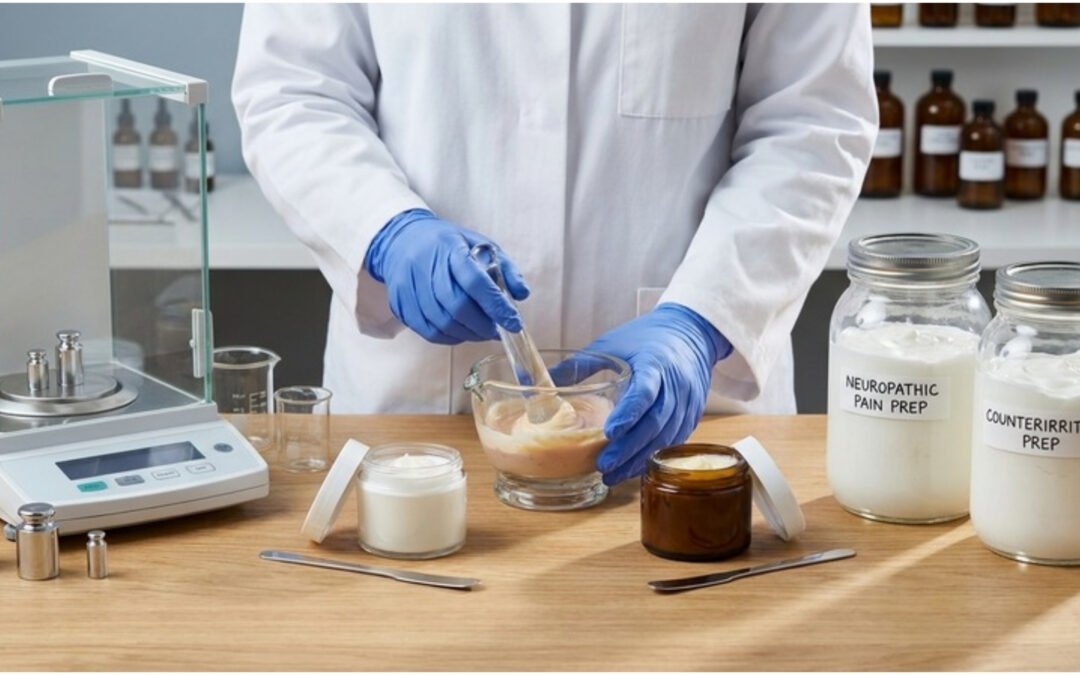
Short answer: Two distinct compounded topical preparations — a capsaicin-counterirritant cream (capsaicin 0.025%, methylsalicylate 15%, camphor 3.6%) for localised musculoskeletal pain, and a gabapentin-hormone cream (gabapentin 6%, estriol 0.1%, testosterone 0.1%)...
by Darren ng | Sep 28, 2026 | Uncategorized
Short answer: A compounded BLT cream combining benzocaine 20%, lidocaine 6% and tetracaine 4% delivers triple-local-anaesthetic surface anaesthesia at strengths no single commercial product offers — the commercial EMLA cream carries lidocaine 2.5% and prilocaine 2.5%....